
Český Krumlov and its population in the 17th and 18th centuries
 Český Krumlov left the
periods of late Renaissance and Mannerism and entered the period of
Baroque with a steady number of inhabitants. The horrors of the
Thirty Years' War hardly affected the town, as is evidenced by the
number of houses. In 1600 there were 336 burgher houses in Český
Krumlov and in 1653 there were 351 houses, four of them
deserted.
Český Krumlov left the
periods of late Renaissance and Mannerism and entered the period of
Baroque with a steady number of inhabitants. The horrors of the
Thirty Years' War hardly affected the town, as is evidenced by the
number of houses. In 1600 there were 336 burgher houses in Český
Krumlov and in 1653 there were 351 houses, four of them
deserted.
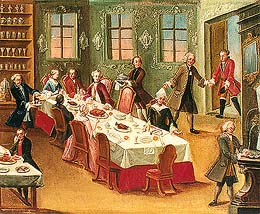
An approximate estimate of the number of inhabitants in the middle of the 17th century could be expressed by a figure of 2,500. An absolute majority of towns-people in Český Krumlov were workmen and craftsmen. Their fields and gardens in the vicinity of Český Krumlov had a total area of 225 hectares.
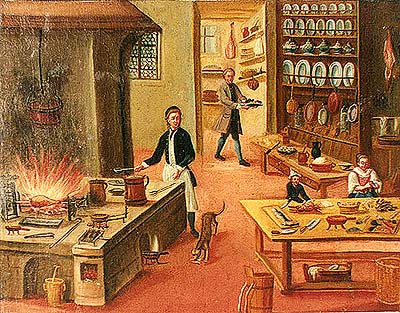
Let's look at the number of workmen in some professions as they were recorded by written sources from the middle of the 17th century. At that time there were, among others, 2 locksmiths, 2 kettle-smiths, 9 blacksmiths, 8 carpenters, 2 cabinet-makers, 2 coopers, 8 bricklayers, 13 tanners, 4 saddlers, 16 drapers, 13 weavers, 6 hatters, 12 tailors, 7 shoemakers, 7 bakers, 1 gingerbread-maker, 13 butchers, 3 chimney-cleaners, and 2 ropers. In Český Krumlov were also 7 merchants with food and wine and 6 stall-keepers.
From the end of the 17th century the division of Český Krumlov into 12 districts began to take force. This divided the towns-people into parts of approximately the same area for the purpose of paying taxes and other fees. The town administration of that time made smaller and more well-arranged town administration units which undoubtedly was connected with the increase of office bureaucracy. The division into the 12 districts was also in effect in the 18th century.
The first town district included houses at Český Krumlov's square and in today's Šatlavská street, while houses in Masná street, Horní street and Kostelní street belonged to the second town district. The third town district included houses in Kájovská street, Široká street and Dlouhá street. Houses in Radniční street, Panská street, Soukenická street and Na louži street belonged to the fourth town district. The fifth town district was made up from houses in Parkán. In the sixth district were houses at Latrán at the side closer to the castle and at the castle steps. Houses at Latrán at the side closer to Vltava River and at New Town made up the seventh district. The eighth district included houses in Rybářská street and Linecká street, the ninth district included houses at upper Plešivec, and houses at lower Plešivec belonged to the tenth district. Houses at Upper gate belonged to the eleventh district and the twelfth district included houses at Budějovice square.
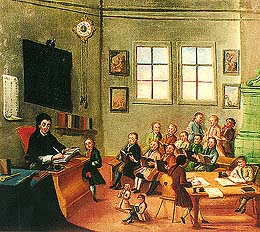 At the turn of the first
and the second decade of the 18th century there were also working,
in addition to other workmen, 2 locksmiths, 6 blacksmiths, 17
carpenters, 4 cabinet-makers, 4 coopers, 11 bricklayers, 10
drapers, 18 weavers, 4 hatters, 7 tailors, 13 shoemakers, 10
bakers, 1 gingerbread-makers, 13 butchers, 3 chimney-cleaners, 3
ropers and 2 soap-makers.
At the turn of the first
and the second decade of the 18th century there were also working,
in addition to other workmen, 2 locksmiths, 6 blacksmiths, 17
carpenters, 4 cabinet-makers, 4 coopers, 11 bricklayers, 10
drapers, 18 weavers, 4 hatters, 7 tailors, 13 shoemakers, 10
bakers, 1 gingerbread-makers, 13 butchers, 3 chimney-cleaners, 3
ropers and 2 soap-makers.
During the course of the 17th century and in the first half of the 18th century several new buildings appeared at the area of Český Krumlov. Indisputably the most important of them is the former Jesuit institute where today's District Museum of National History has its place. The construction of the institute started in the years 1650 - 1652 at the place of six destroyed burgher houses in Upper street. The construction of the Baroque chapel of St. Martin at the former cemetery in the area of today's town park started in 1738.
Many of Český Krumlov's houses were re-constructed or repaired in this period of time. We can see it at many preserved baroque.
Further information:
History
of Guilds and Crafts in Český Krumlov
(ak)